The AI that actually
understands music theory.
The music theory app that answers with rendered notation, interactive diagrams, and harmonic analysis computed by MIT's music21 engine. Not AI guesswork.
No credit card required
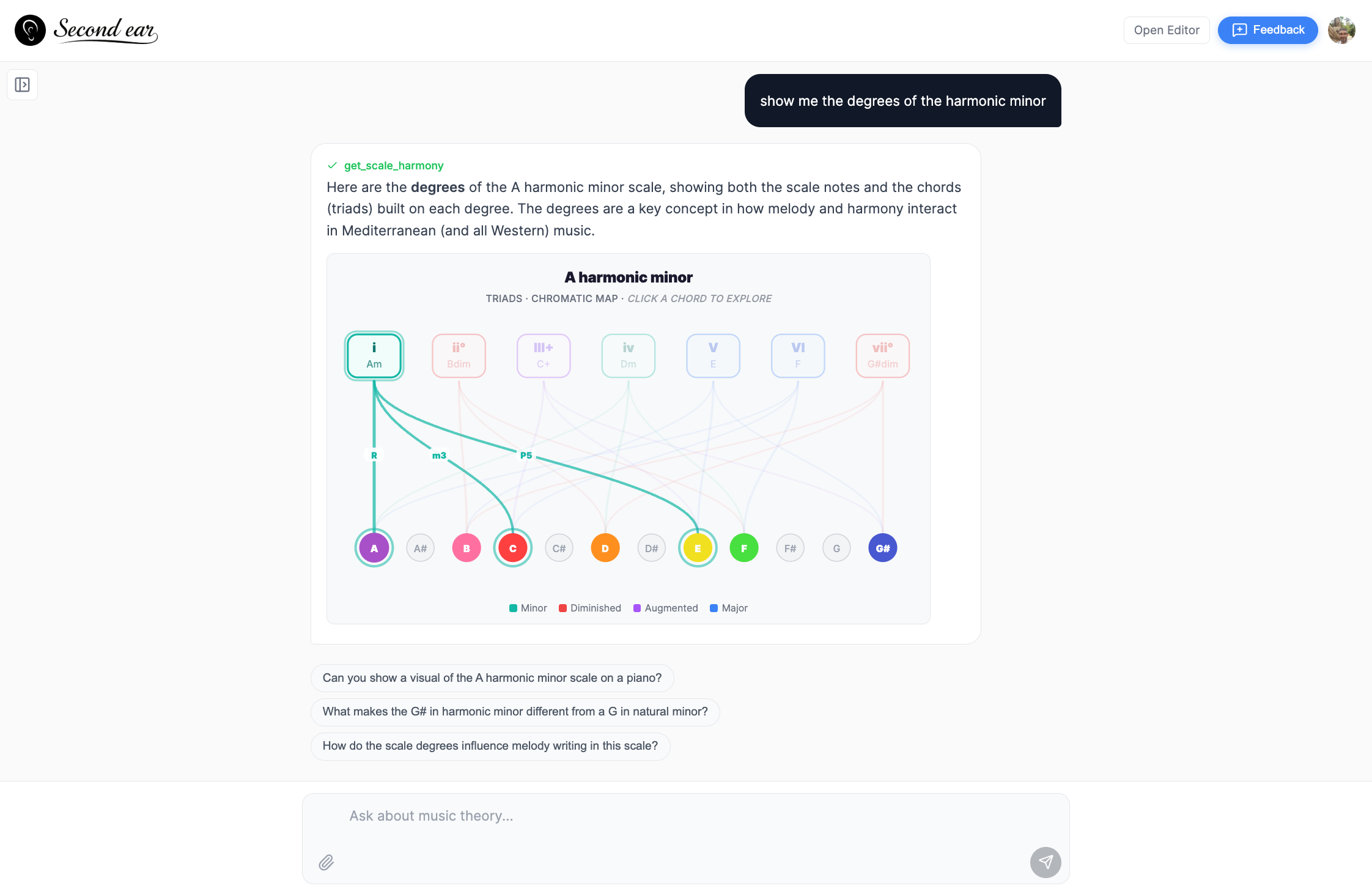
Try Second Ear — Right Now
This is a real AI, not a canned demo. Ask any music theory question and get answers with notation, diagrams, and computed analysis.
Ask me anything about music theory, harmony, or chord analysis. I'll respond with explanations and rendered notation.
Your question will open in the full Second Ear app · Sign up free for unlimited access
Music theory you can see.
Click any chord or RNA label on the score to explore interactive diagrams — chord anatomy, scale harmony, interval consonance, and more.
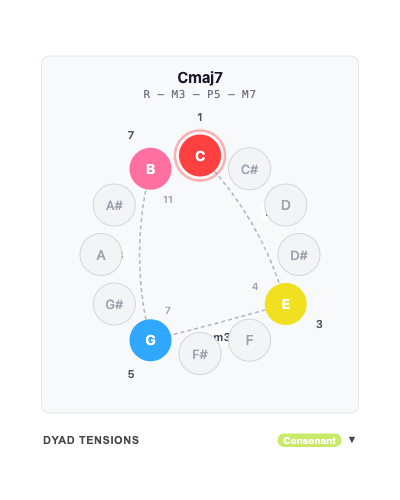
Chord Anatomy
See every chord mapped on the chromatic circle with intervals, degrees, and dyad tension analysis.
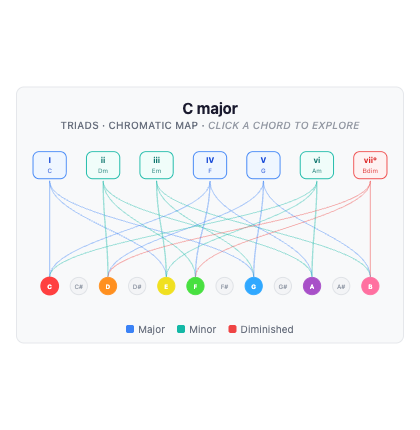
Scale Harmony Map
All diatonic triads and sevenths visualized as a chromatic map — see how chords connect to scale tones.
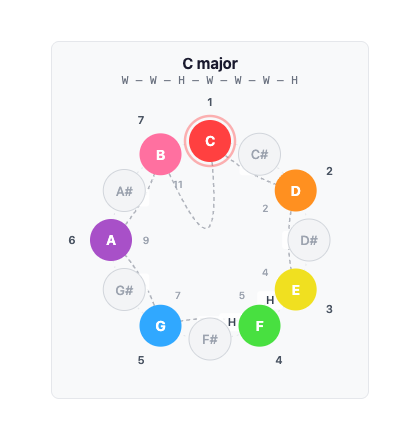
Scale Visualization
Scale degrees on the chromatic circle with whole and half step patterns clearly marked.
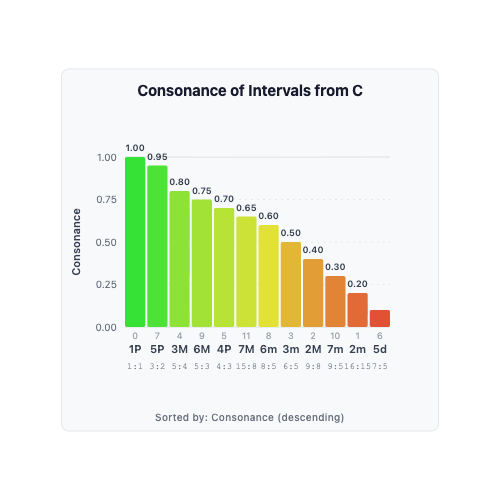
Interval Consonance
Every interval from a root ranked by consonance — from perfect unison to tritone.
Powered by Real Music Theory,
Not Guesswork
Unlike ChatGPT, Second Ear computes real harmonic analysis, renders sheet music, and shows interactive diagrams. AI chat is just the beginning.
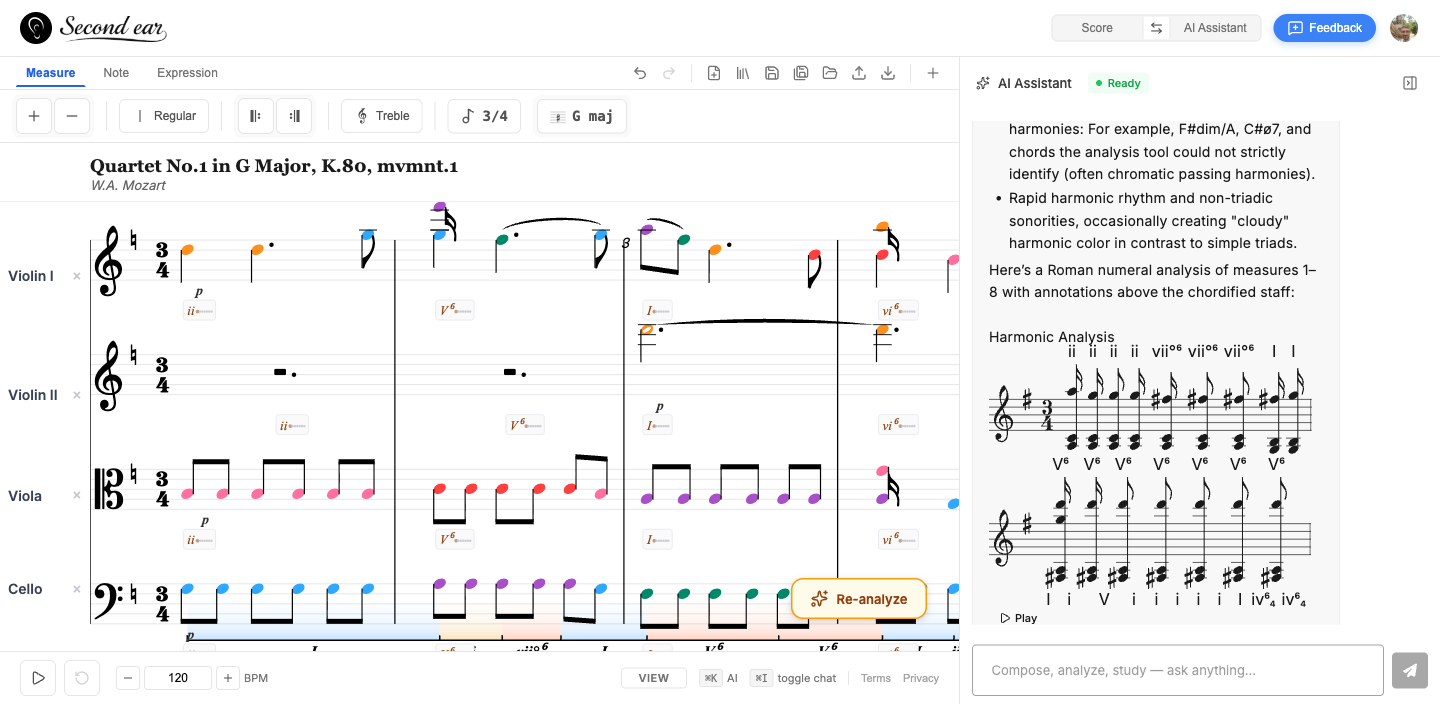
AI Score Reader
Ask natural-language questions about any score. The AI responds with computed analysis directly on the staff — not speculation.
- "Where are the secondary dominants?"
- "Show me the tension curve"
- "Why does this chord feel unexpected?"
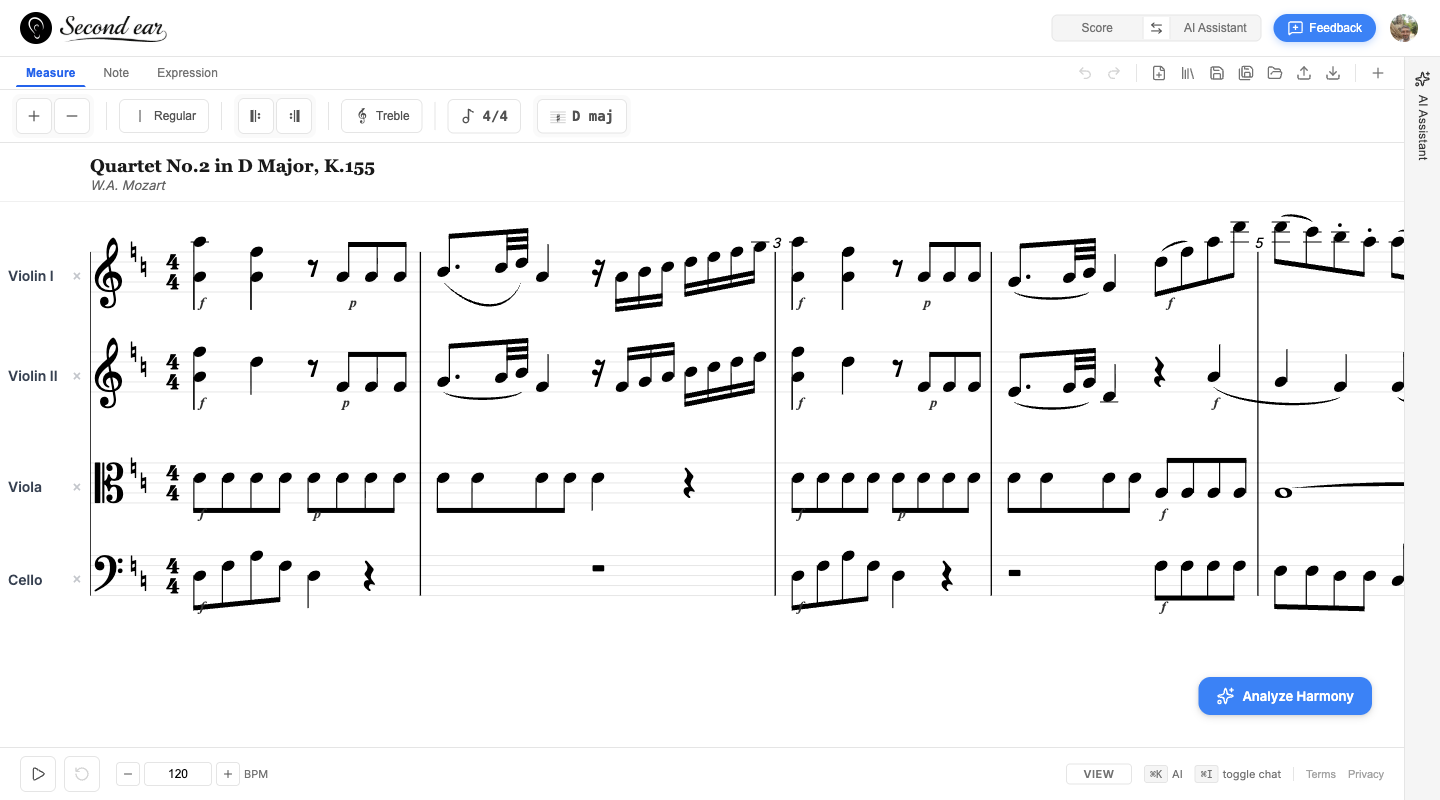
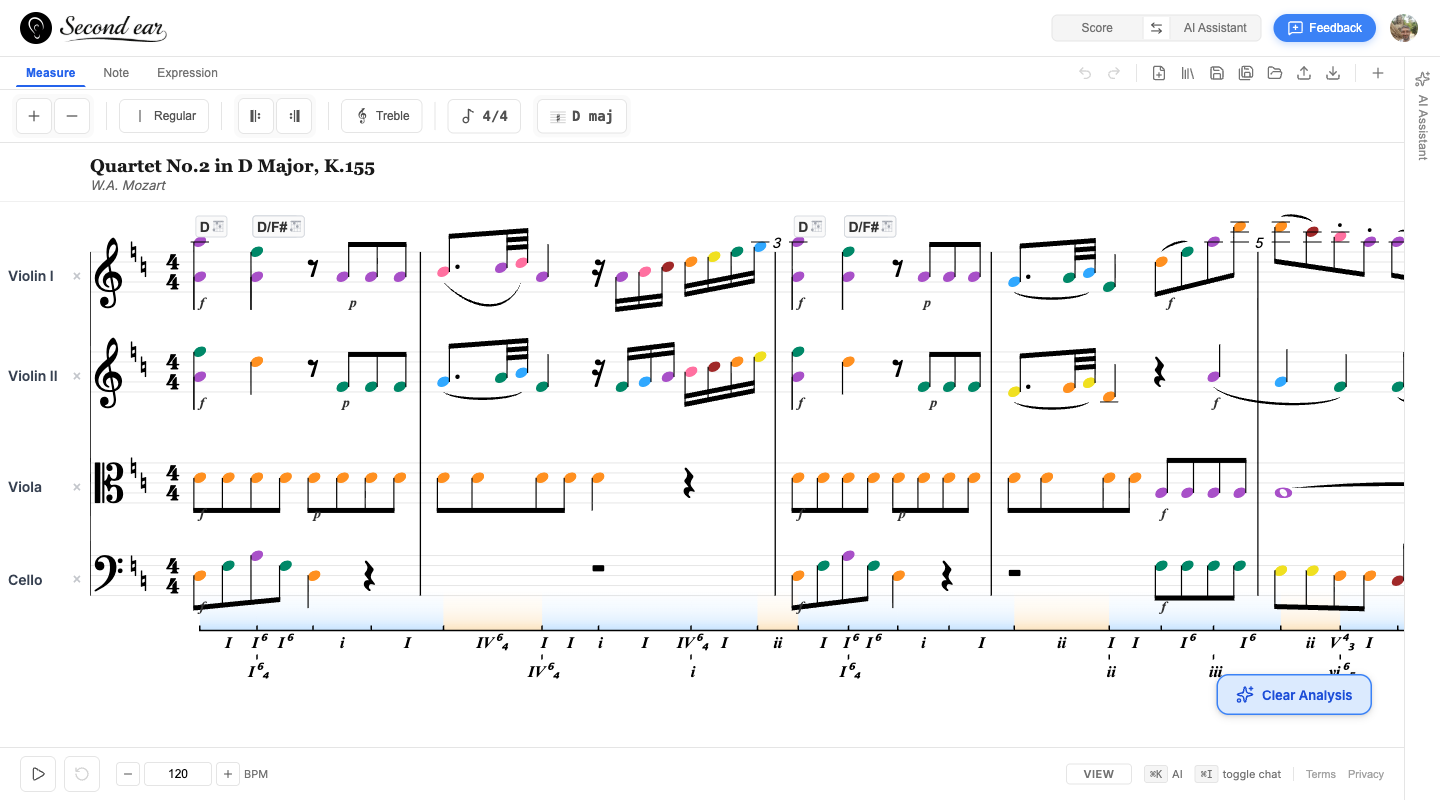
Analyze Harmony
One click reveals the harmonic skeleton: Roman numerals, chord labels, modulations — all computed by MIT's music21 engine. Not AI guesswork.
- Structural RNA & chord detection
- Modulation & key tracking
- Functional coloring by harmonic role
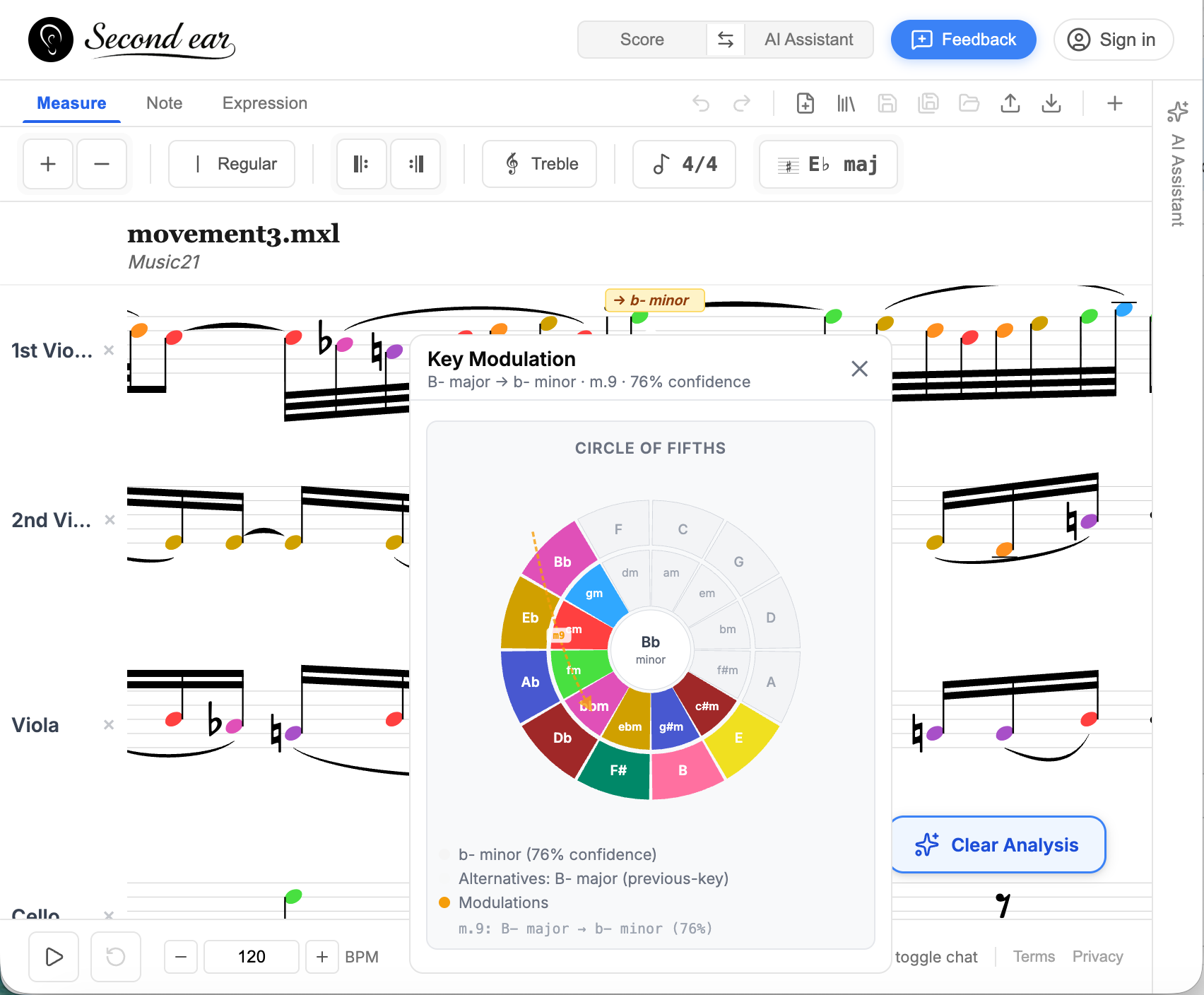
Interactive Theory Overlay
Every chord label is a portal. Click any RNA numeral or chord symbol to see piano and guitar diagrams, interval breakdowns, and resolution paths.
- Piano & guitar chord diagrams
- Interval quality breakdown
- Resolution path visualization
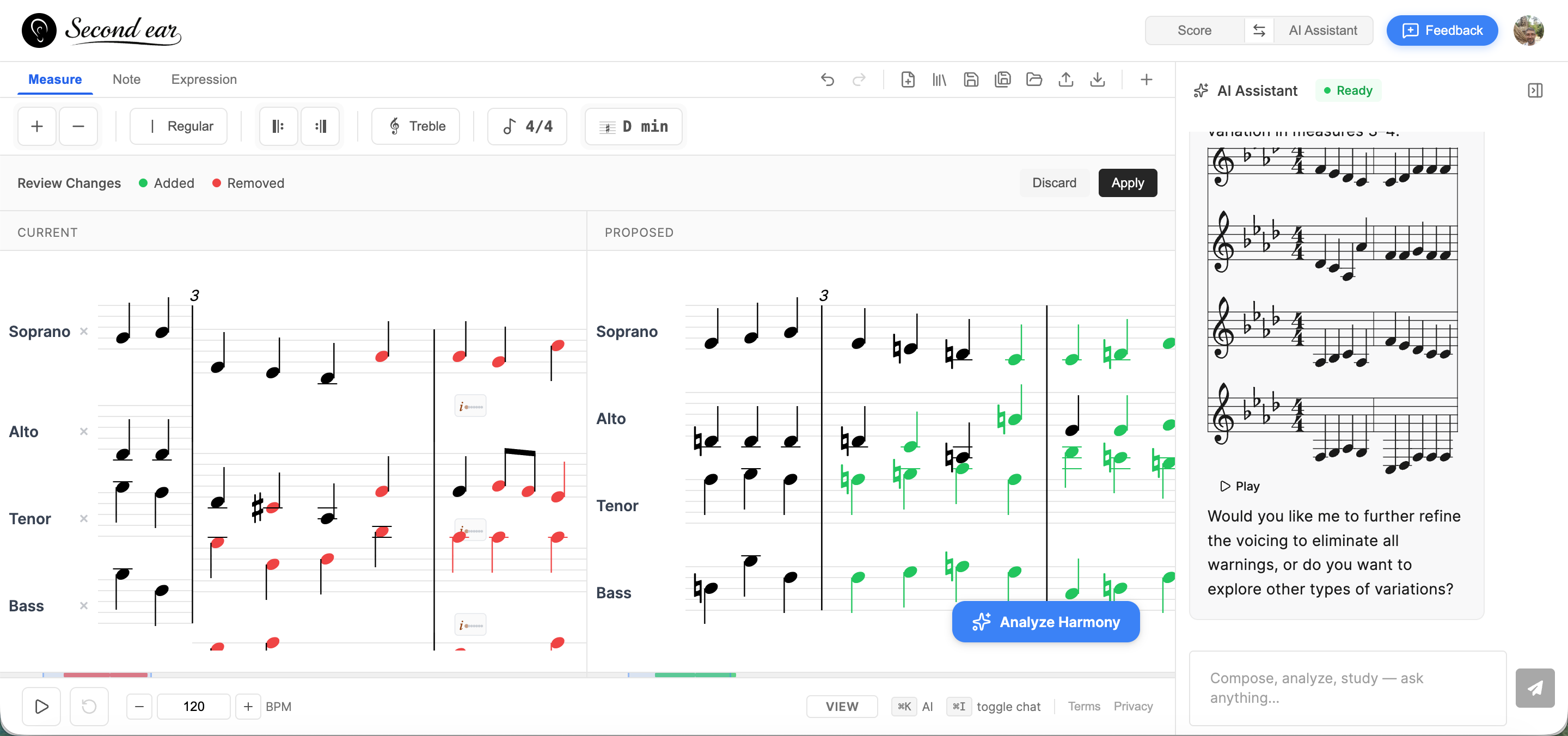
Notation Editor + AI Assist
Two ways to write music: keyboard for speed (A-G inserts notes), AI for intelligence (harmonize, transpose, arrange). Every change shown as a visual diff.
- MuseScore-speed keyboard input
- AI harmonization & arrangement
- Visual diff — Apply or Discard
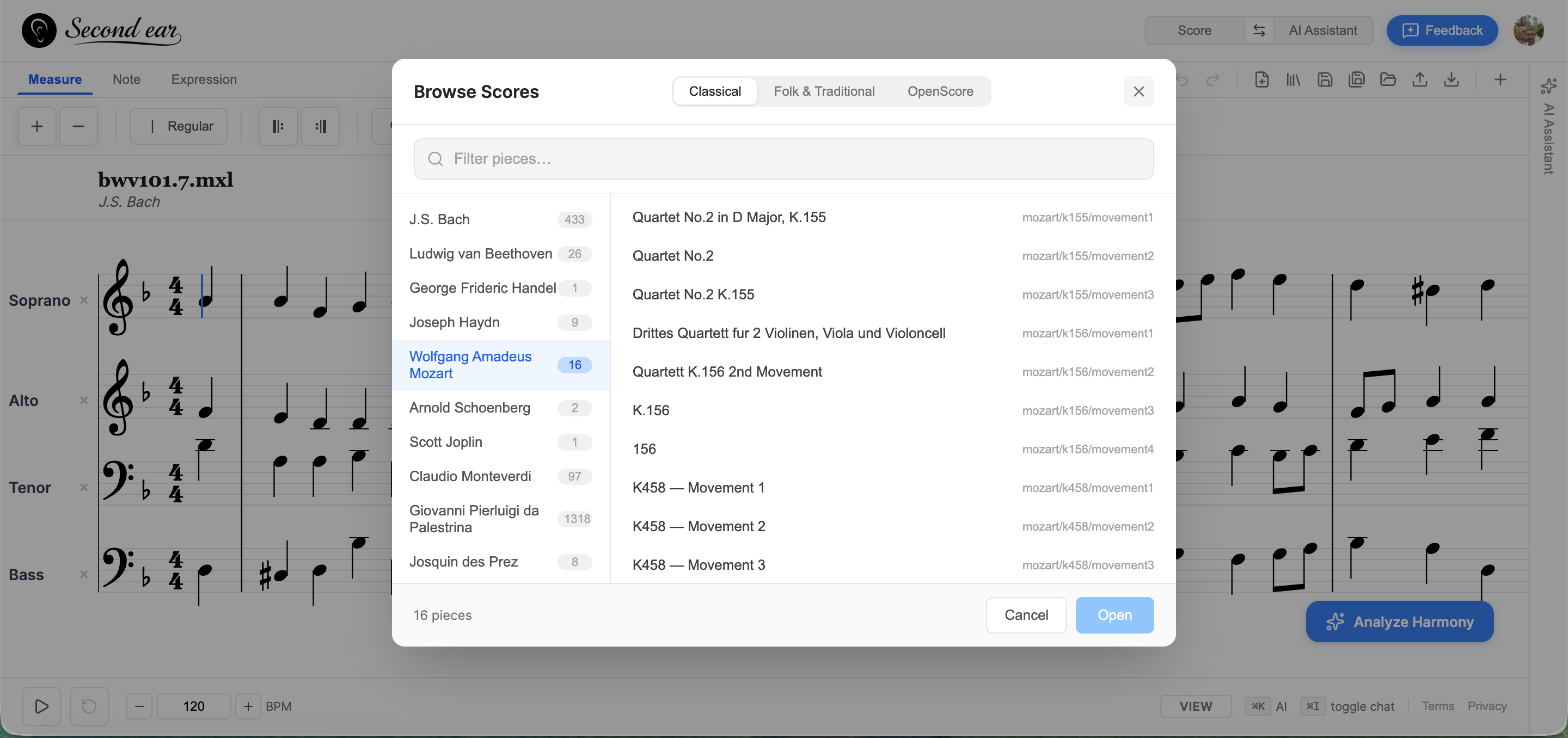
Hundreds of Masterworks, Ready to Study
Bach chorales, Mozart sonatas, Beethoven quartets, Irish folk tunes, and more. Load any score and analyze instantly.
Simple, Transparent Pricing
Start free. Upgrade when you need more.
Free
Perfect for exploring and learning
- 100K AI tokens/month
- Analyze Harmony (limited calls)
- MusicXML import
- Full corpus access
- AI composition assistant
Pro
For serious students & professionals
- Expanded AI token limit
- Unlimited Analyze Harmony
- MusicXML + PDF import
- Full corpus access
- Priority AI responses
What Musicians Are Saying
"I load a Bach chorale, ask the AI to analyze the harmony, and I see Roman numerals appear on the score. Then I ask "where are the parallel fifths?" and it highlights them. It's like having a harmony professor available at 3 AM."
"I always read tabs and notes but never really understood the harmony underneath. Now I load a piece, hit Analyze, and suddenly I see the modulations, the cadences, the functional structure. My interpretation has changed completely."
"I project Second Ear in class and analyze scores live with students. They can see the Roman numerals update in real time as I walk through a passage. It's replaced my whiteboard for teaching functional harmony."
The AI that actually understands music theory.
Ask anything. See the answer on the staff.
Free tier forever — no credit card required.